Home / Guides / How luggage size is measured
Guide
How luggage size is measured
Limits change; confirm with your airline before you fly. Every figure here links to the airline page it came from.
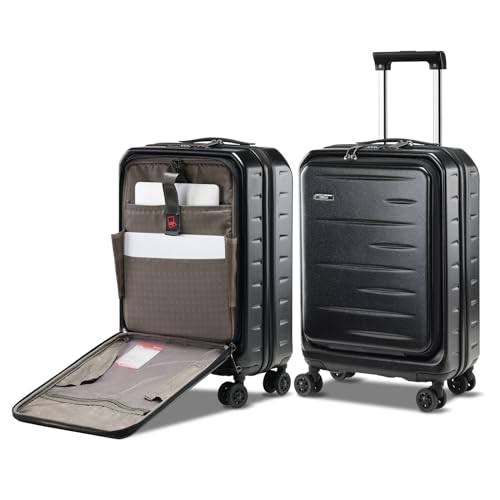
CENSIEN 20 Inch Carry On Luggage 22×14×9 Airline Approved with Front Pocket
21.46 x 13.78 x 8.66 in, wheels and handles included; 6.5 lb listed
This CENSIEN hardside spinner is listed at 21.46 x 13.78 x 8.66 inches including the wheels and handle, under every side of the 22 x 14 x 9 inch figure American, Delta, United, Alaska, JetBlue, Hawaiian and Virgin Atlantic all publish as their carry-on limit. Its own listing measures the way a gate sizer measures.
$74.99 Check price on Amazon
Prices change often.
Does an airline measure the bag itself, or just the shell?
Every airline in this site's data measures the whole outside of the bag as it will roll onto the plane. American Airlines' own carry-on page says the total size, including handles and wheels, must fit the sizer at the airport. Delta states the same thing for its 45 linear inch limit: combined length, width and height, with handles and wheels included.
That is why this site's catalog marks a product's size as dimsBasis with-wheels or stated. A with-wheels figure is the number an airline would actually check against its sizer. A stated figure is printed on the listing without that confirmation, so treat it as a starting point rather than a guarantee.
What actually gets included in the outside measurement?
Spinner wheels, the retracted telescoping handle and any structured side pocket that adds to the bag's footprint all count. A shell that looks like it is 21 inches tall can measure 22 or 22.5 inches once the wheel housings and handle stub are added in, because the airline is measuring the silhouette a passenger carries down the aisle, not the molded shell by itself.
- Spinner or inline wheels: counted
- Telescoping handle, retracted: counted
- Structured front or side pockets: counted if they add to the footprint
- A loose shoulder strap or luggage tag: generally not part of the rigid footprint
| What you measure | Counts toward the published limit? |
|---|---|
| Spinner or inline wheels | Yes, on every airline in this site's data |
| Telescoping handle, retracted | Yes |
| Structured side or front pocket | Yes, if it adds to the footprint |
| Unzipped expansion panel | Yes once expanded, no while collapsed |
| Loose shoulder strap or luggage tag | Generally not part of the rigid footprint |
What is a sizer box, and does a bag need to slide in without pushing?
The metal or plastic sizer bin at check-in or the gate is built to the airline's own published dimensions, and it does not compress. If a bag has to be forced, tilted or squeezed to fit, it fails the check even when a tape measure says it is within a tenth of an inch. This is also why a bag measuring 22 x 14 x 9.2 inches with wheels can fail a 22 x 14 x 9 inch sizer, while a slightly softer softside bag that gives under its own weight can sometimes pass the same box.
How do I compare a bag's three numbers to a published limit?
Sort both sets of numbers from largest to smallest before comparing. An airline publishes its limit as length, width and height in a fixed order, but a bag does not care which side is up when it goes into the sizer. Sort the bag's own three measurements largest to smallest, sort the airline's three published numbers the same way, and compare the two lists position by position.
This is the same method used throughout this site's comparison charts: every side of the bag has to fall at or under the matching side of the limit, in that sorted order, for the fit to count.
Does the depth change once an expansion zipper is opened?
An expandable carry-on's listed size is its collapsed size. Unzipping the expansion adds depth, often an inch or two, and that added depth is exactly the dimension most full-service airlines cap at 9 inches. A bag that clears the sizer collapsed can fail it expanded, which matters most on the flight home with souvenirs packed in.
What should I actually do before a trip?
Measure the bag with a tape measure at its widest points, wheels and handle included, and compare the sorted numbers against the specific airline's page rather than trusting an 'airline approved' label on a listing, which is a marketing phrase and not a certification from any carrier. This site's fit calculator does the sorting and comparison automatically against every airline in this guide's data.
Gear for this
 $48.00Check price
 $77.16Check price
 $131.99Check price
 $413.99Check price
Frequently asked questions
Does 'airline approved' on a listing mean it is guaranteed to fit every airline?
No. 'Airline approved' is a marketing phrase, not a certification issued by any airline. The only reliable check is comparing the bag's own with-wheels measurements, sorted largest to smallest, against the specific airline's published limit for the route and fare being flown, since limits vary by carrier and sometimes by cabin.
Why does a bag's listing sometimes show two different sizes?
Some listings print a bare shell measurement alongside a with-wheels figure, and the two can differ by an inch or more. The with-wheels number is the one that matters at the gate, because that is how airlines describe their own sizer. If a listing gives only one number, treat it as a starting point rather than a confirmed fit.
Should I measure my carry-on myself even if the listing states a size?
Yes, with the wheels attached and the handle extended slightly, since housings and hardware sometimes add fractions of an inch a listing rounds away. A tape measure at the widest point of each side takes about a minute and avoids a gate-check surprise on a bag that was close to a limit.
Does the same measuring method apply to personal items and checked bags?
Yes. Personal items are measured the same outside-in way, wheels and handles included, just against a smaller box. Checked bags add length, width and height together into one linear-inch total rather than comparing the sides individually, and are also checked by weight, which carry-on bags usually are not.
Researched, not professional advice. Airline rules change; confirm with your airline before you fly.