Home / Comparisons / Hard shell vs soft shell luggage
Comparison
Hard shell vs soft shell luggage
 Best hard shell
Samsonite Winfield 2 Hardside Luggage with Spinner Wheels
23 x 14.5 x 9 in with wheels, 6.7 lb$123.08Check price Best soft shell
Travelpro Maxlite 5 Softside Carry-On Luggage Spinner
23 x 14.5 x 9 in with wheels, 5.4 lb$160.00Check price
| Samsonite Winfield 2 Hardside | Travelpro Maxlite 5 Softside Spinner | |
|---|---|---|
| Price | $123.08 | $160.00 |
| Weight | 6.7 lb | 5.4 lb |
| Listed size, with wheels | 23 x 14.5 x 9 in | 23 x 14.5 x 9 in |
| Shell type | Hard shell | Soft shell |
| Wheels | Spinner, 4 wheel | Spinner, 4 wheel |
| Expandable per this listing | Not listed as expandable | Not listed as expandable |
| General shell behavior | A rigid shell holds its shape and resists crushing, but a hard corner impact can crack the panel outright | A fabric shell flexes and gives under a squeeze, but the exterior fabric abrades and can fray at the corners over years of use |
What is the actual construction difference?
A hard shell suitcase has a rigid outer panel, commonly a molded plastic such as polycarbonate or ABS, formed into two clamshell halves that snap or zip shut. A soft shell suitcase has a fabric body, usually nylon or polyester, stretched over an internal frame, with the zippers doing the work of holding the shape.
That single construction choice is what drives almost every other difference on this page: how the bag protects its contents, how it looks after a few years, and in some cases how much it weighs.
Does a hard shell protect your stuff better?
As a general material property, a rigid shell distributes an impact across the panel and keeps its shape, so contents inside are less likely to get crushed by an armrest or a stacked bag on top. The tradeoff is that a sharp, concentrated impact, like a dropped corner on concrete, can crack a hard panel rather than absorb it.
A soft shell does the opposite: it gives a little under pressure rather than transmitting it straight to a rigid wall, and a scuff or scrape is far less likely to crack anything, since there is no rigid panel to crack.
Which one fits tighter into an airline sizer?
A hard shell holds a fixed outer dimension because the panel cannot compress, so if it fits the sizer once, it fits it every time you pack the same way. A soft shell can sometimes be squeezed a half inch smaller into a tight sizer bin when it is packed light, but an overstuffed soft shell can also bulge past its listed size, which a hard shell physically cannot do.
If you are cutting it close on a strict carrier, run the exact listed dimensions through /calculators/will-it-fit/ before you buy either style.
Is a soft shell automatically less durable?
Not by default. Durability here is about failure mode, not a ranking. A hard shell fails by cracking or splitting a panel; a soft shell fails by tearing fabric, popping a zipper pull, or fraying at a wheel well. Neither published spec sheet claims one style survives longer than the other, and this page makes no testing claim either way, only the general material behavior of rigid plastic versus woven fabric.
Does hard shell always weigh less, like the marketing suggests?
Not in this catalog. The Samsonite Winfield 2 Hardside above weighs 6.7 lb while the Travelpro Maxlite 5 Softside Spinner weighs 5.4 lb, a 1.3 lb gap in the soft shell's favor, even though both share nearly the identical 23 x 14.5 x 9 inch with-wheels footprint. Weight comes down to the specific frame, wheel hardware and lining a brand chose, not the shell type alone, so check the listed weightLb on any bag you are actually comparing rather than assuming by shell type.
The verdict
Pick a hard shell if you want a fixed, predictable exterior size for a strict sizer, a shell that will not bulge from overpacking, and you can accept the risk of a crack from one bad drop. Pick a soft shell like the Travelpro Maxlite 5 if you want lower weight, exterior pockets you can reach without opening the case, and a shell that will not crack apart. If you fly ultra-low-cost carriers with tight metal sizers, lean hard shell for exact, repeatable dimensions.
Shop both sides
 $48.00Check price
 $77.16Check price
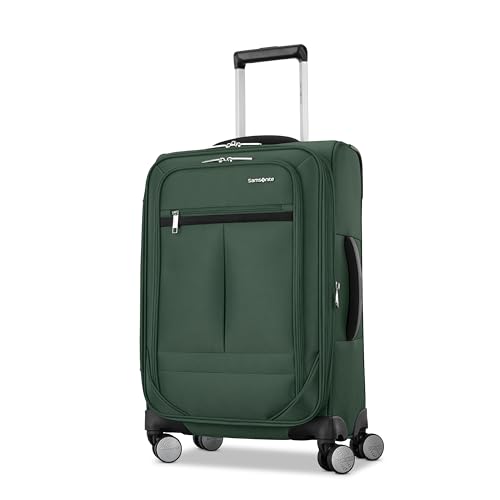 $139.99Check price
 $413.99Check price
Frequently asked questions
Is hard shell luggage more durable than soft shell?
Durability depends on what kind of damage you are worried about. A hard shell resists crushing and holds its shape, but a hard corner impact can crack the panel. A soft shell flexes under pressure and will not crack, but the fabric can tear or fray at the seams and wheel wells over years of use. Neither is universally tougher, they just fail differently.
Are hard shell suitcases always heavier than soft shell ones?
No. In this catalog the hard shell Samsonite Winfield 2 weighs 6.7 lb and the soft shell Travelpro Maxlite 5 Spinner weighs 5.4 lb, so the soft shell is lighter despite the common assumption that hard shells are the lightweight choice. Always check the individual listing's weight rather than assuming by shell type.
Can a cracked hard shell suitcase be repaired?
Some manufacturers sell replacement shell panels or offer repair programs, but a cracked hard shell often cannot be fully restored to its original rigidity at home. A soft shell tear can usually be patched or stitched more easily, which is one reason some travelers prefer fabric for bags they expect to get roughed up.
Do soft shell bags fit better in a tight overhead bin?
A soft shell can sometimes compress a bit to slide into a snug bin, especially when it is not packed to capacity. A hard shell holds its exact listed dimensions and will not compress at all, which makes it more predictable at a strict gate sizer but less forgiving if the bin is already tight.
Researched from published specifications and airline pages, not hands-on testing. Not professional advice.